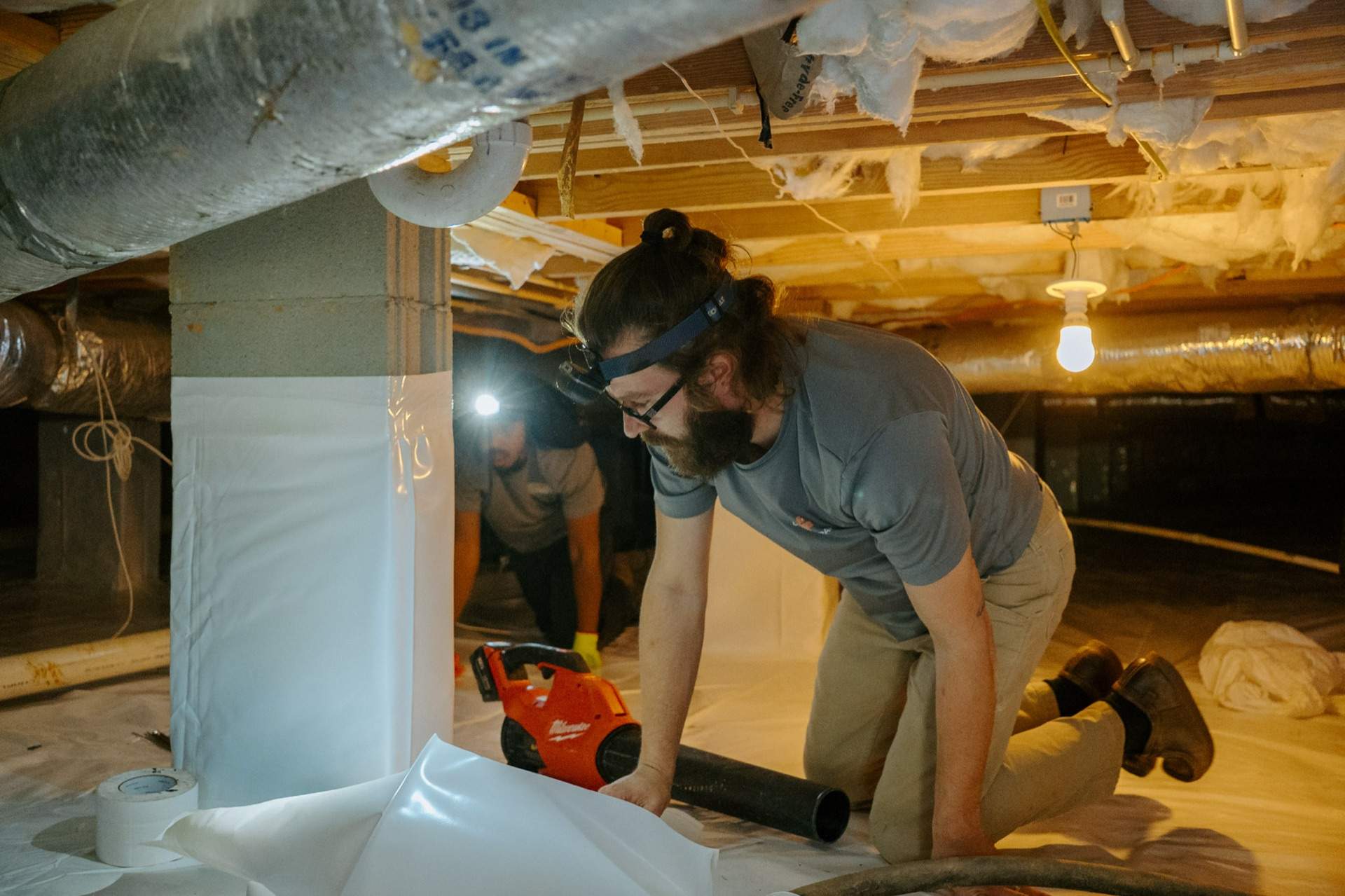
Basement Waterproofing
Basement Waterproofing Systems That Start Under the Slab
Water is standing along your basement wall, or it was after the last storm, and the smell tells you it never fully dried. That water didn't wander in by accident. It's following pressure, and it will keep following it until something under the slab gives it a better place to go. We build that place: an interior drainage system, a commercial-grade sump, and permanent dehumidification, scoped by a free inspection.
Book a Free Inspection
A specialist will call you back to schedule.
WHY IT HAPPENS
Why Water Keeps Finding Your Basement
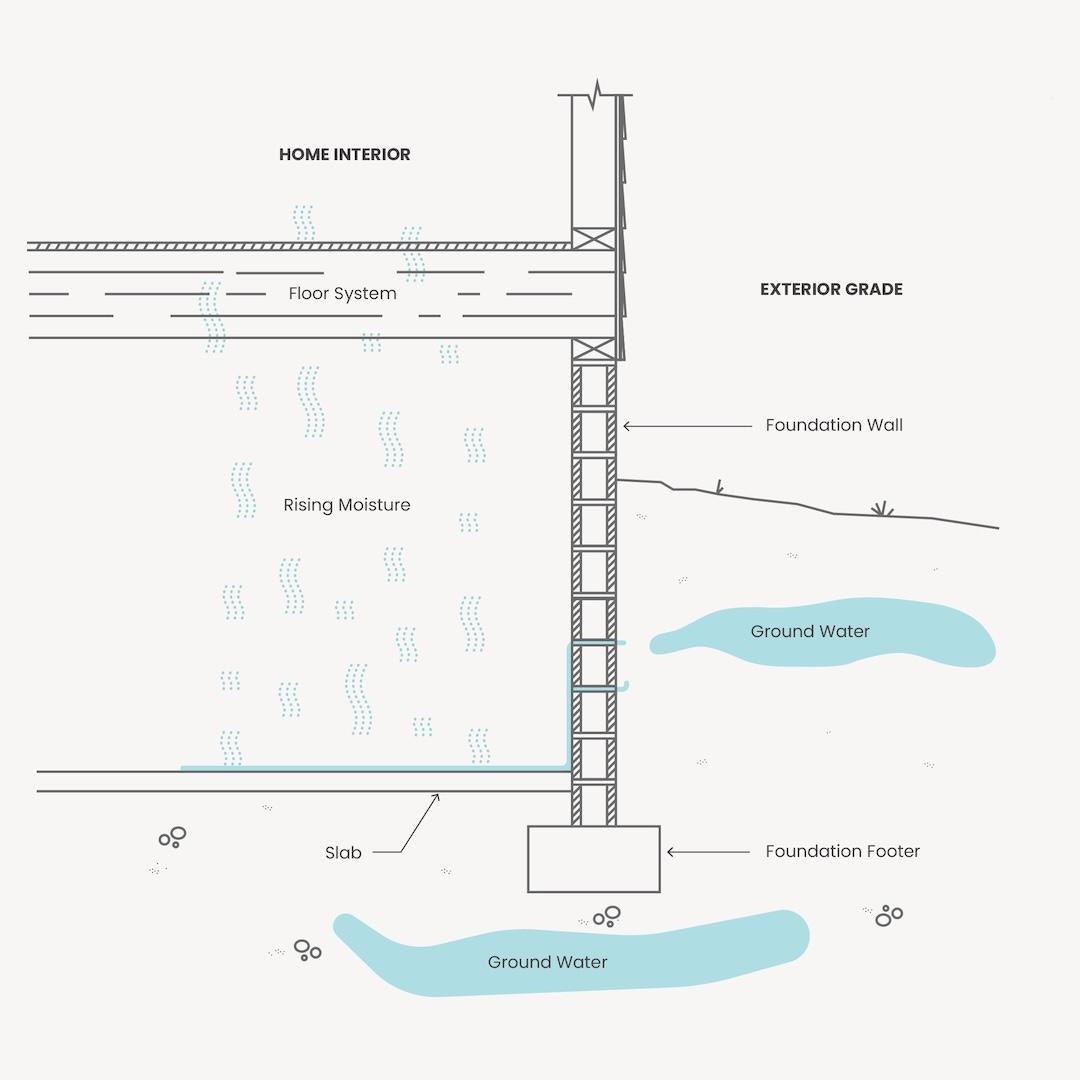
Your basement floor sits lower than the ground around it. When rain percolates down and becomes groundwater, that water presses against the basement wall and under the slab, and it takes any path it finds: through porous block, through the joint where the wall meets the footing, or up from underneath.
Soil makes it worse across most of our service area. Operators in 16 of our markets across 11 states describe the same driver: dense clay that won't absorb rain. "Water doesn't permeate that well into red clay soil, so you get a lot of water runoff, which leads to intrusion into the crawl space or basement". The storm ends, the yard dries, and the water that never soaked in is still pressing on your foundation.
WARNING SIGNS
The Six Ways Water Gets Into a Basement
Water down there is not normal, and it usually traces to one of six causes. Some of those are cheap fixes you can make this weekend. The rest are pressure problems, and pressure problems don't respond to paint, caulk, or hope. They respond to drainage.
If you've just found water, don't panic. The problem isn't that water got in; it's whether it stays. Find the source if you can, get air moving to start the drying, and have a residential waterproofing professional evaluate it.
- Poor yard drainage
- Clogged gutters or short downspouts
- Cracked foundation walls
- High groundwater
- Plumbing or HVAC leaks
- Unsealed penetrations with no ground barrier
THE SYSTEM
Interior Drainage First: How We Waterproof a Basement
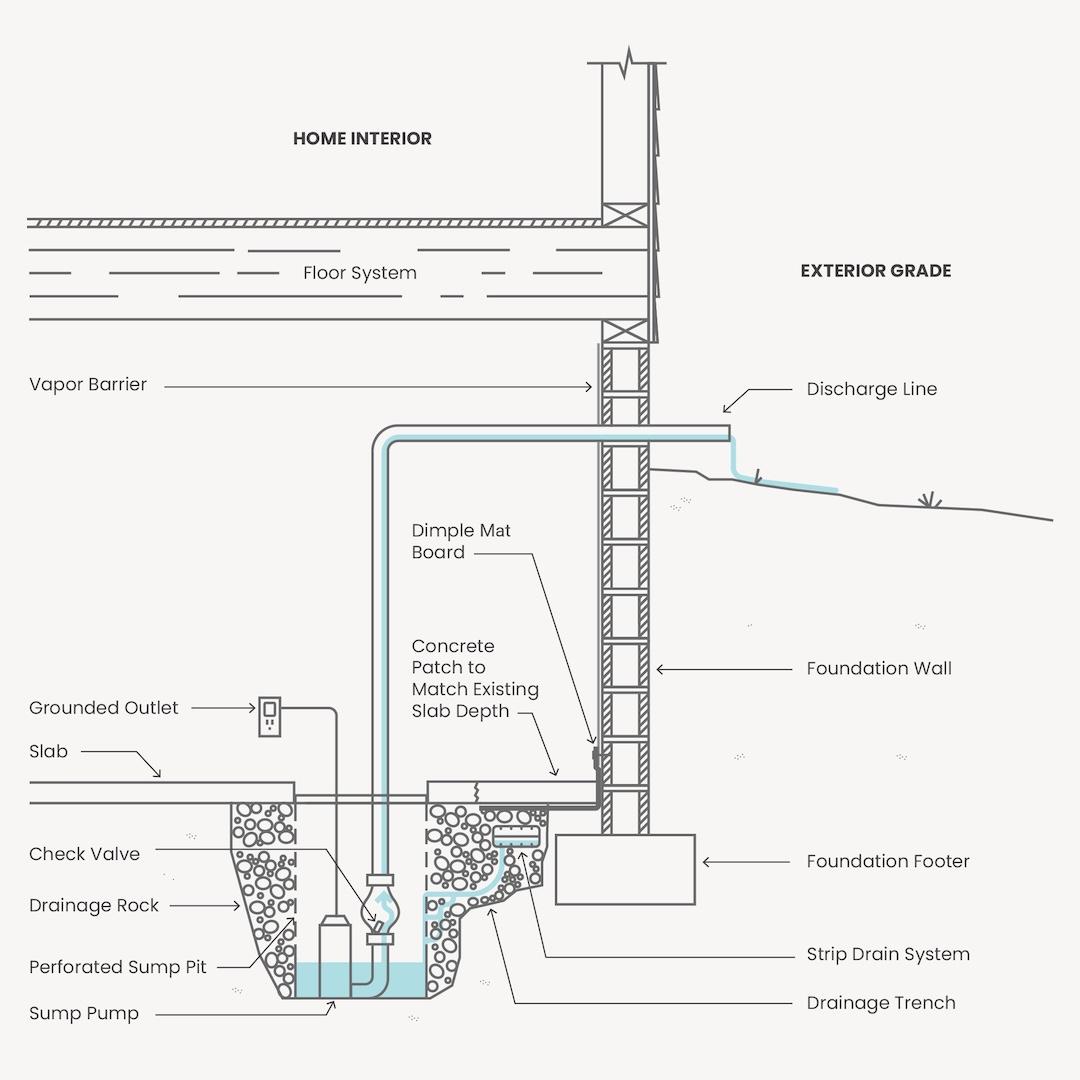
Crawlspace Medic waterproofs basements from the inside out, and there's a reason for the order. Exterior coatings and patches try to hold water back. Interior drainage stops fighting the water and manages it instead, permanently, from under your floor.
Here's what that looks like in practice:
In our basement-heavy markets, our crews also repair bowing basement walls with carbon-fiber straps, reinforcing the wall against the same soil pressure that pushed the water in. One thing we don't skip: the design comes from your inspection, not from a package. No two houses load water the same way, and we don't believe in a one-size-fits-all approach.
SUMP PUMPS
Commercial-Grade Sumps, Not Brochure Hardware
The pump is the working heart of the system, so we don't cut corners on it. Our markets install commercial-grade sump pumps; brands vary by market, and the units typically carry three-year to lifetime warranties. A float switch actuates the pump automatically as water rises, so the system works at 3 a.m. whether you're home or not, and battery backups are offered wherever power loss is a risk.
You're also not left managing paperwork when hardware fails. Our crews service manufacturer warranty replacements on pumps and dehumidifiers directly, so you deal with us, not the manufacturer, and every job carries a one-year workmanship warranty.
THE AIR UPSTAIRS
Basement Moisture Doesn't Stay in the Basement
You might be tempted to shut the basement door and live above the problem. That doesn't work, because mold spores are airborne and microscopic: released spores rise with warm air or ride the HVAC system, so basement mold reaches the air upstairs even if you never go down there. As one of our local operators puts it: "It's not a mold problem or a fungal problem. It's a moisture and humidity problem".
That's why a persistent musty smell is worth taking seriously, and why the fix has an order: find the source, test the moisture, dehumidify, clean or discard affected materials, seal the space, and replace your filters. It's also why anti-fungal treatment, the single most common line item across our network's invoices, is almost always paired with moisture control. Treatment without fixing the moisture is temporary.
START HERE
The Inspection Comes First, and It's Free
Every basement system we build starts the same way: someone gets eyes on the problem. A Crawlspace Medic inspection is a photo-documented walk of your full basement or crawl space. We start with a lap around the house, then work through moisture readings, floor structure, insulation, and evidence of water movement, and we finish with a walkthrough of the findings and recommendations customized to your house and your budget. "We do not believe in a one-size-fits-all approach… no two houses are the same".
You keep the photos and the findings whether you hire us or not. And the inspection costs nothing: free inspections are standard across our network, and in 25,00+ invoice line items an inspection has never appeared as a billed charge. If you're weighing a bigger decision, buying a home with a wet basement, selling one, or comparing a scary quote, start with a free inspection and get a second set of measurements before you spend real money.
PRICING
What Basement Waterproofing Costs
We'd rather you hear real numbers than a sales script. Full moisture-control projects, drainage plus sealing and dehumidification, typically land between about $5,000 and $13,000 depending on footprint and scope; operators across our markets report average project tickets around $6,000 to $9,000, with smaller footprints starting near $4,500. The inspection sets the scope; there is no flat price list. In basement-heavy markets like Nashville, operators put typical basement projects at $9,000 to $12,000 within that same framing, and again, the inspection sets the scope.
Many fixes are smaller than you fear. Across 8,000+ invoiced jobs, the median is under $1,000: a sump pump line runs about $899 and a dehumidifier about $1,722. At the other end, major structural or water rebuilds run roughly $20,000 to $80,000, and they're the exception, not the norm: only a handful of jobs in our invoice export exceed $15,000. Wherever your house falls, the inspection sets the scope, and the inspection is free.
What Homeowners Say
Customer Reviews, in their words.

“This company is well-run from top to bottom. I own a business myself and know the value of timeliness, honesty, and transparency. Initially, Chris and Cody were going to install a full sump pump drainage system in our basement. But, once they came back and did a job prep, they determined that was not the best course of action and made recommendations that did not benefit them financially. Use this company for your crawl space and basement problems.”
“John and his crew did a excellent job on waterproofing my basement. They had to dig a trench around the interior of all the walls in my basement, lay piping and concrete to finish out the job. I would highly recommend this company.”
“I am thankful for Crawlspace Medic's work, installing an interior French drain in my basement. Quality and efficiency come to mind as I consider their work. Mike, Jesse, and Spencer were stellar on all fronts. I especially appreciated their clean up when completing the project.”
Common Questions
Questions homeowners ask.
Do you have to dig up the outside of my house?
No. Our system is installed from inside the basement: we open the slab along the wall, set the drain beside the footer, and patch the concrete back, so your landscaping, porch, and driveway stay put. We don't do exterior excavation at all; where a home genuinely needs it, we'll say so and refer out.
How much does basement waterproofing cost?
Full projects typically run about $5,000 to $13,000 depending on footprint and scope, and operators in basement-heavy markets like Nashville put typical basement work at $9,000 to $12,000. Single services are often far less; the network-wide median job is under $1,000. The inspection sets the scope, and it's free.
Is a little water in the basement ever normal?
No. Water under a home is not normal, and it traces to a short list of causes: yard drainage, gutters and downspouts, cracked foundation walls, high groundwater, plumbing or HVAC leaks, or unsealed penetrations. Small and occasional today tends to mean bigger and recurring later, because the pressure that pushed it in doesn't retire.
What should I do the day I find water?
Don't panic. The problem isn't that water is there; it's if it stays there. Identify the source if you can, create ventilation to start drying, then have a waterproofing professional evaluate it. Start with a free inspection: it's photo-documented, and you'll see everything we see.
Can basement mold really affect the rest of the house?
Yes. Spores are microscopic and airborne; they rise with warm air or ride the HVAC system into your living space, whether or not you ever open the basement door. That's why we treat the moisture, not just the growth.
I searched "basement waterproofing near me." Do you serve my area?
We operate over 30 locations across 11 states, each locally owned and operated by people who live in the communities they serve, and basement work is first-hand in roughly a dozen of them, from Evansville and Columbus to Richmond, Nashville, and Birmingham. If we're not the right fit where you live, we'll tell you.
What is the scope of basement waterproofing?
Our basement scope is interior drainage and moisture control: sub-slab drains, sumps, wall membranes, dehumidification, and carbon-fiber reinforcement for bowing walls in the markets that do that work. We don't do foundation crack injection, we don't do exterior excavation, and we don't install push piers. If your inspection shows your home needs work outside our scope, we'll tell you plainly and refer you to a qualified structural specialist instead of stretching to sell you something we shouldn't. Our operators put it simply: "If I'm going to suggest a repair, there's going to be evidence to back it up".
Where We Work
Where Crawlspace Medic Does Basement Work
We’ll be straight with you: Crawlspace Medic is a crawl space company first, and basement waterproofing is genuine first-hand work in roughly a dozen of our markets. It’s strongest in Evansville, where basements are about 30% of the work, along with Richmond, Columbus, Louisville, Nashville, Tuscaloosa, the Tri-Cities, Indianapolis, Birmingham, and Fredericksburg. Our Deep-South coastal markets are almost entirely crawl space.
If your home sits on a crawl space instead of a basement, the same drainage thinking applies under your floor: see crawl space waterproofing.
Find Your LocationFind Out What's Really Happening Under Your Slab
A free, photo-documented inspection, findings you can see for yourself, and a scope built for your house. Inspections never show up as a line item on our invoices, because they're actually free.