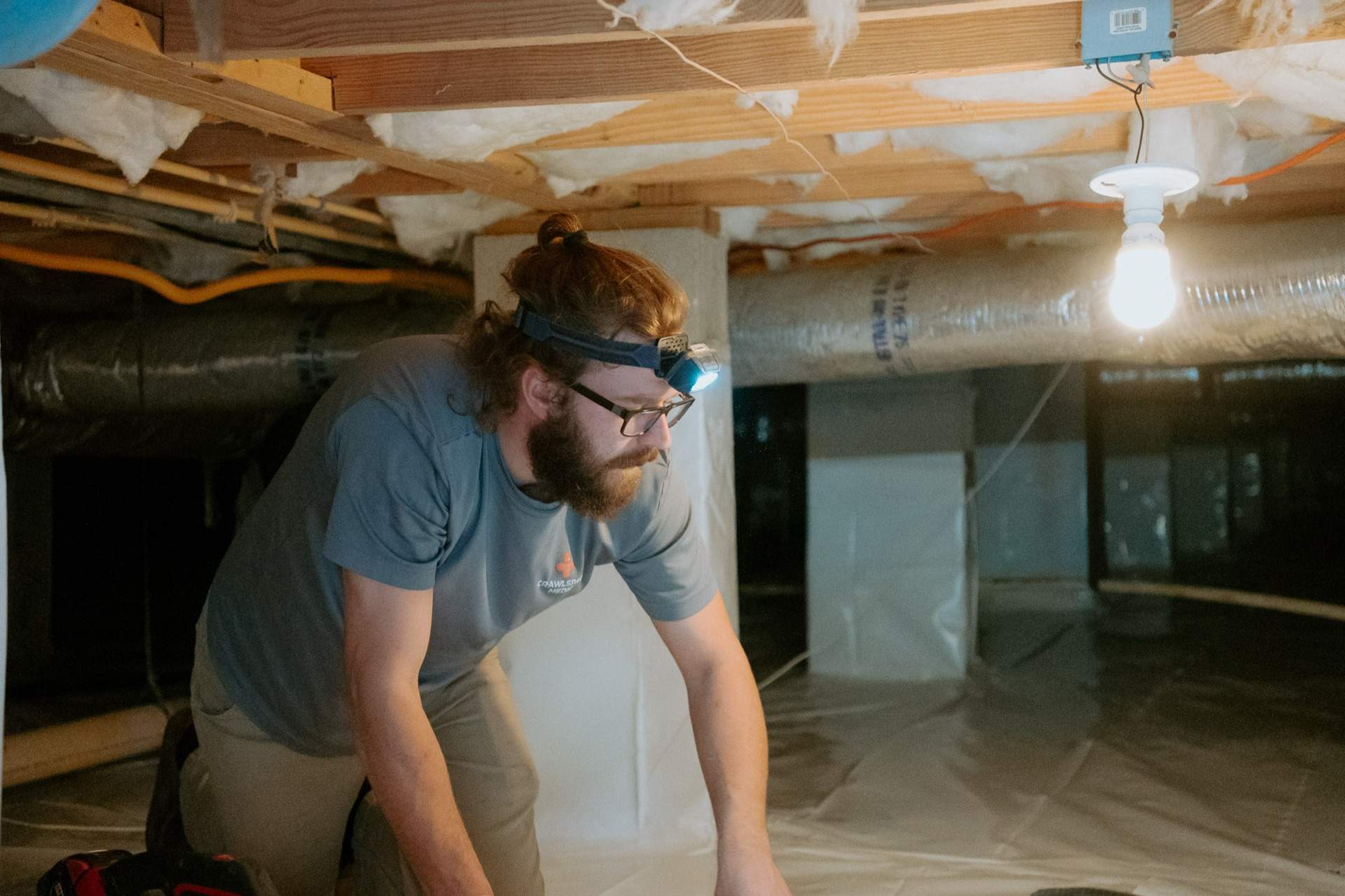
We Stop Water Under Your Home
Crawl Space Waterproofing
Find where the water gets in, give it somewhere to go, and keep the space dry for good. Free, photo-documented inspections.
Book a Free Inspection
A specialist will call you back to schedule.
The Problem
There's Water Under Your House
You saw it during a plumbing repair, smelled wet dirt through the floor vents, or found it in a home inspector's photos: standing water, or soil that never dries, under the house you live in. That wet-dirt smell upstairs is worth taking seriously on its own. Across our markets, a musty or wet-dirt odor in the living space is the single most common reason homeowners call us in the first place.
Start with the fact that matters most: water in a crawl space is not normal, and it doesn't fix itself. Left alone, it feeds fungal growth on your framing and raises the moisture content of the wood your floors stand on; high wood moisture and humidity are the most common findings our inspectors record nationally. A wet crawl space also becomes its own ecosystem, drawing insects, rodents, and worse into the dark, damp space under your floors. The good news is that crawl space water is a solved problem, and the fix starts with understanding where yours comes from.
The Mechanism
Where the Water Actually Comes From
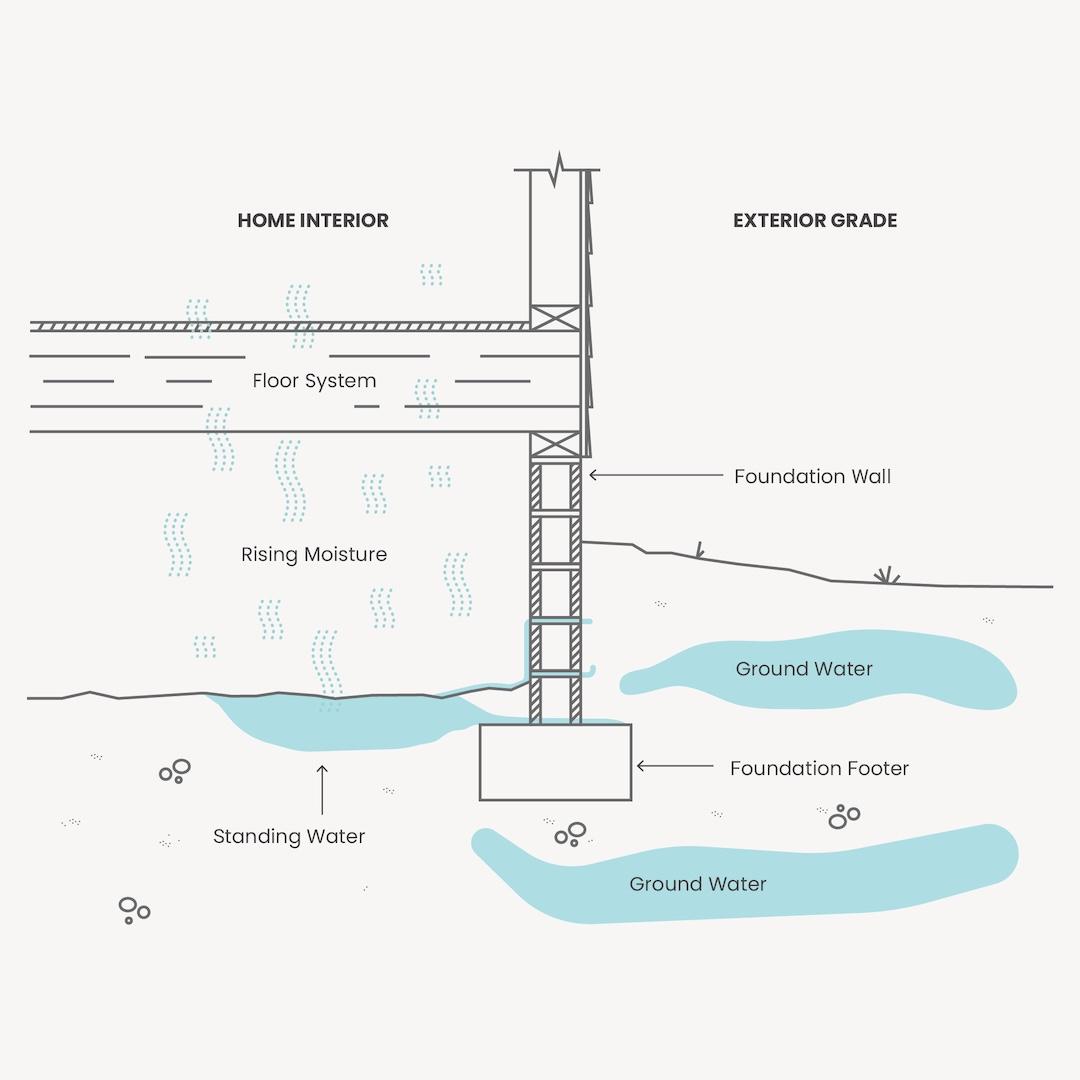
Crawl space water most often starts outside. Rain percolates down through the soil and becomes groundwater, and because your crawl space usually sits lower than the surrounding grade, that groundwater presses against the crawl space's perimeter wall. From there it seeps through block, between footing and wall, or under the footing and back up into the space.
Across our service area, soil makes it worse. Operators in more than 16 of our markets across 11 states describe the same driver: dense clay that sheds rain instead of absorbing it. "Water doesn't permeate that well into red clay soil, so you get a lot of water runoff, which leads to intrusion into the crawl space or basement," is how our Greenville operator explains it.
That detail is why the answer is drainage, not plugging holes. Water that can't soak into the soil keeps moving until it finds the lowest open space around, so the fix is to give it an easier, engineered path and pump it back out.
The Causes
Six Common Causes of Crawl Space Water
When our inspectors trace water to its source, it's almost always one of these six. Often more than one is at work, and several of these have smaller fixes than you'd guess.
Clogged gutters and short downspouts sit on this list for a reason: when roof water lands beside the foundation instead of away from it, it ends up underneath. A downspout extension costs a lot less than a drainage system, and if that's all your house needs, that's what we'll tell you.
- Poor yard drainage
- Clogged gutters or short downspouts
- Cracked block walls letting groundwater through
- High groundwater
- Plumbing or HVAC leaks
- A missing vapor barrier with unsealed penetrations
First Aid
Found Water? Do This First
“Don't panic — the problem isn't that water is there, it's if it stays there.”
That's the framing our inspectors work from, and it's your first-aid checklist too. Identify the source if you can. Create ventilation so the space starts drying. Then have a residential waterproofing professional evaluate it.
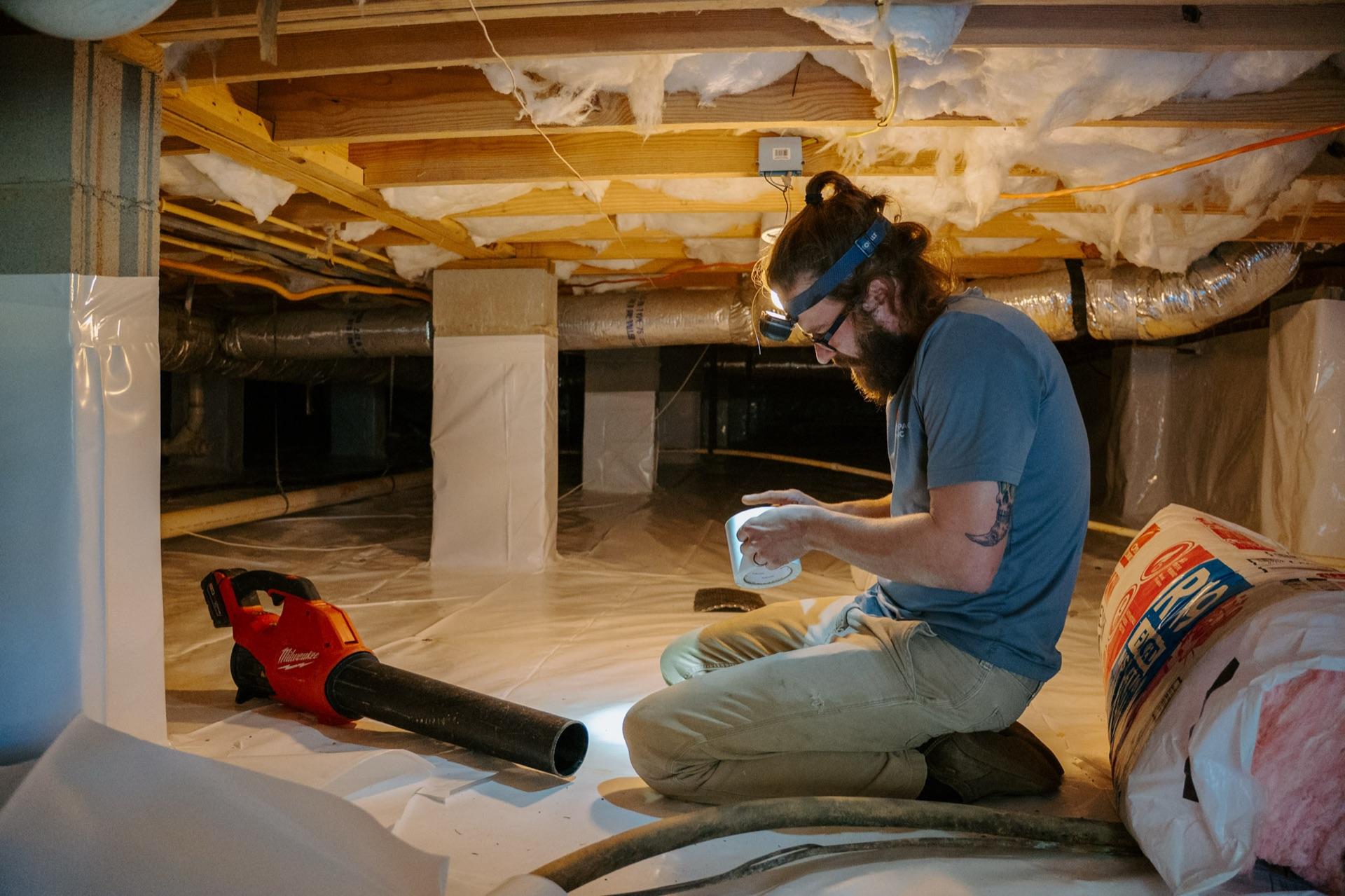
Ours will do that evaluation free of charge. A Crawlspace Medic inspection is a photo-documented crawl of the full crawl space: a lap around the house first, then moisture readings, floor structure, insulation, vapor barrier, and pest evidence, followed by a walkthrough of the findings with recommendations customized to your house and your budget. We don't believe in a one-size-fits-all approach, because no two houses are the same.
The Fix
Four Tools, Combined Around Your House
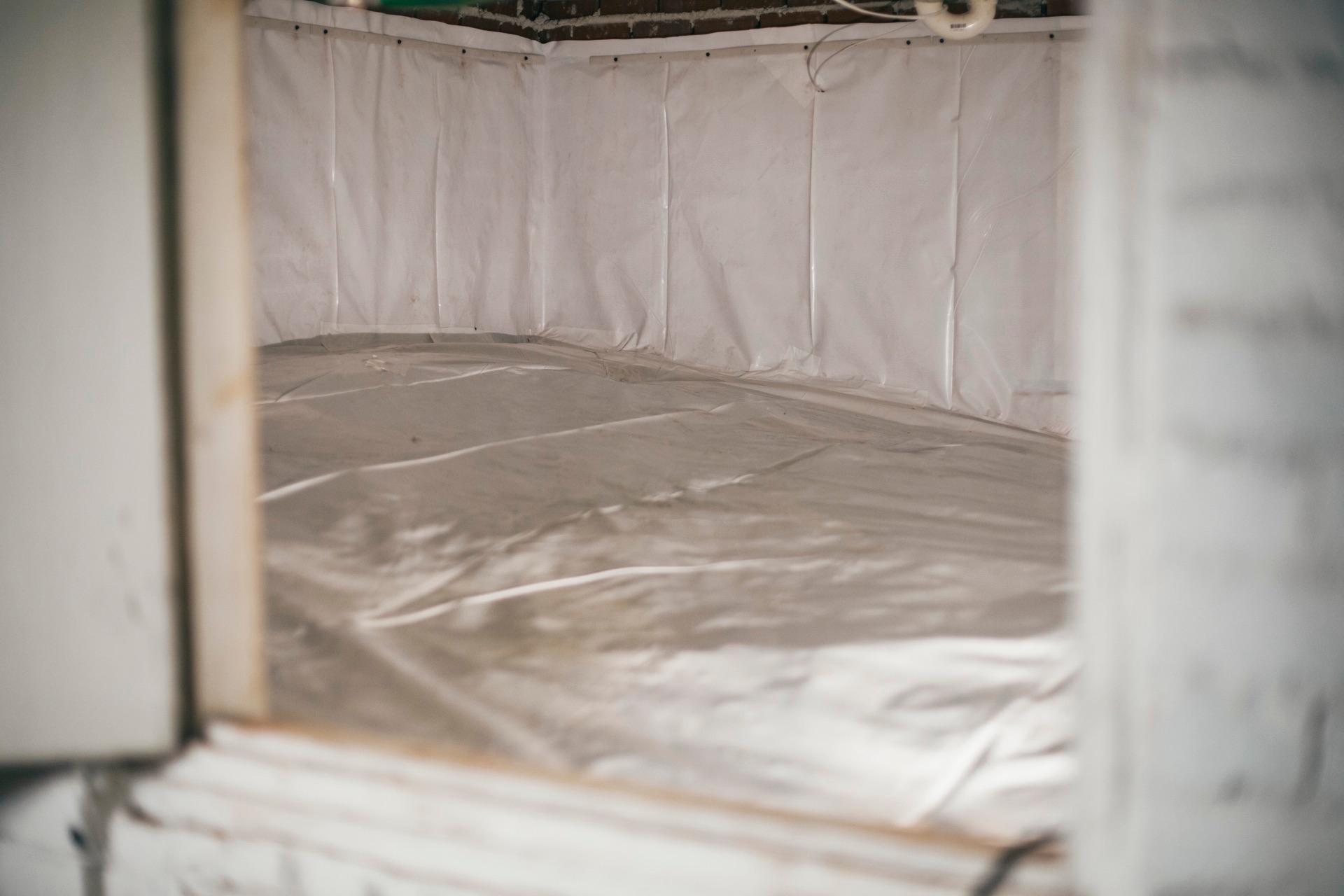
Foundation drainage comes down to four tools: interior French drains feeding a sump pit, downspout extensions, standalone sump pumps at the low point, and encapsulation. Most homes need a combination, designed around the home's layout, soil, and climate rather than pulled off a shelf. That's the difference between a drainage design and a package with a brand name. One house might need a full drain run and two pumps; the neighbor might need downspout extensions and nothing else. The inspection tells us which house yours is.
“We are solution-oriented here at Crawlspace Medic.”
If your home sits on a basement instead of a crawl space, the same interior-drainage logic applies down there; see basement waterproofing.
Drainage
Interior French Drains: The Workhorse
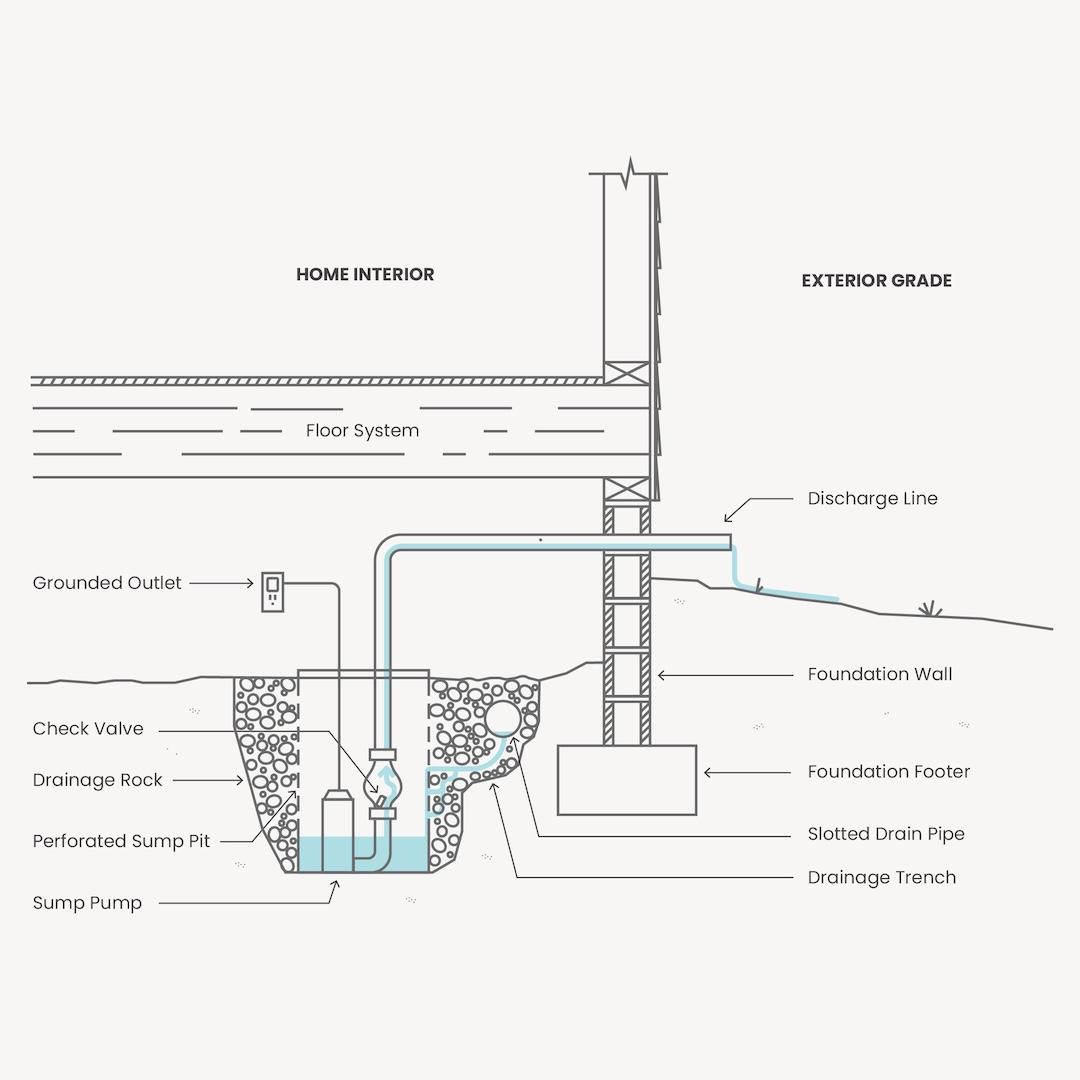
An interior French drain gives water under your house a permanent exit. The crew digs a trench along the interior perimeter, tight to the wall and footing, lays 4-inch perforated corrugated pipe wrapped in a filter sock, and sets it in washed gravel. The trench slopes to a sump basin at the crawl space's low point, and the pump discharges outside through PVC.
Once it's in, water that used to pond under your house collects in the trench, travels the pipe to the basin, and gets pumped outside before it can sit against your framing.
Sequence matters as much as parts. The drain and pumps go in before any vapor barrier does: "We always recommend installing the drain first and the pumps." A barrier laid over an unresolved water problem just hides it. Once the space stays dry, sealing it is the next step; that's covered under crawl space encapsulation.
Pumps
Sump Pumps: Commercial-Grade, No Gimmicks
We install commercial-grade sump pumps; the specific brand varies by market because our operators recommend what's proven in their soil and their service history, and the units typically carry three-year to lifetime warranties. A float switch actuates the pump automatically as water rises, so it runs whether you're home or not. Where power loss is a risk, we offer battery backups, because the storms that flood crawl spaces are the same ones that take the power out.
Not every house needs the full drain run, either. Where water collects at a single low point, a standalone sump pump at that spot can be the honest scope of work.
Cleanup
Fungal Treatment: Moisture First, Always
Water that sat under your house usually leaves fungal growth behind, and spores don't stay down there. They're airborne and microscopic; they rise with warm air or ride the HVAC system into the rooms above, even if you never open the access door.
“It's not a mold problem or a fungal problem. It's a moisture and humidity problem.”
That's why we treat in the right order. Fungal treatment, anti-fungal fogging and surface treatment, is the single most common line item in our network's invoices at 5,500+ mentions, and it's typically paired with moisture control, because treatment without fixing the moisture is temporary. We fix the water first, then treat what it left behind.
Pricing
What Crawl Space Waterproofing Costs
Single services are more modest than most homeowners expect: across 8,000+ invoiced jobs in our network records, the median is under $1,000, with typical medians around $899 for a sump pump, $680 for fungal treatment, and $321 for a vapor barrier line. Full moisture-control projects, drainage plus encapsulation, typically land between about $5,000 and $13,000 depending on footprint and scope, with operator-reported averages of $6,000–$9,000. The inspection sets the scope; there is no flat price list.
And the scary numbers are the exception, not the norm. Major structural or water rebuilds run roughly $20,000–$80,000, but only a handful of jobs in our entire invoice export exceed $15,000, with a maximum of $38,516. Whatever your house needs, the number starts with a free inspection, not a sales quota; inspections never appear as a billed line item anywhere in our 25,000+ invoice lines.
What Homeowners Say
Customer Reviews, in their words.

“I was very impressed by the work that Crawlspace Medic performed on my crawlspace. I had an excess water problem and damaged insulation. They installed a French drain system, with sump pumps and replaced my damaged insulation. The finished product was exceptional, and Kevin and his crew were professional throughout the entire process. The price was excellent, and I would highly recommend this company for any work that is needed to improve the value of your home.”
“They supported beams and waterproofed crawlspace. Installed dehumidifier. Excellent work done in a timely, professional manner from estimate to job completion. Very reliable. Did not oversell the job Completely pleased with results and with price for services. Great response time. Took time to answer questions.”
“Extremely professional, know what they're doing. Very timely, knew exactly what needed to be done to fix the water in our crawl space, and got it done quickly. And fair pricing. Great company to deal with any crawlspace or water intrusion issues.”
Common Questions
Questions homeowners ask.
Is water under my house normal?
No. Water in a crawl space is not normal, and it usually traces to one of six causes: poor yard drainage, clogged gutters or short downspouts, cracked block walls, high groundwater, plumbing or HVAC leaks, or a missing vapor barrier with unsealed penetrations. An inspection identifies which ones are at work under your house.
I just found standing water. What should I do first?
Don't panic. The problem isn't that water got in; it's whether it stays. Identify the source if you can, create ventilation so the space starts drying, and have a residential waterproofing professional evaluate it. Our evaluation is a free, photo-documented inspection.
Do I need a French drain, a sump pump, or both?
Often both, and sometimes more. Drainage design draws on four tools: interior French drains feeding a sump pit, downspout extensions, standalone sump pumps at the low point, and encapsulation, and most homes need a combination designed around layout, soil, and climate. When a French drain goes in, it feeds a sump basin at the low point by design.
How much does crawl space waterproofing cost?
Single services are modest: across 8,000+ invoiced jobs the median is under $1,000, with a sump pump median around $899 and fungal treatment around $680. Full moisture-control projects typically run about $5,000–$13,000. The inspection sets the scope; there is no flat price list. Rebuilds of $20,000–$80,000 exist but are the exception; only a handful of jobs in our invoice export exceed $15,000.
Will fixing the water get rid of the mold smell?
Fixing the moisture is the required first step; treatment without it is temporary. That's why fungal treatment, our single most common invoice line item at 5,500+ mentions, is typically paired with moisture control. As our field guidance puts it: "It's not a mold problem or a fungal problem. It's a moisture and humidity problem."
When should I schedule waterproofing work?
Our busy season runs roughly March or April through October, driven by humidity and rain. If you have water now, call now. If you're planning preventive work, cooler months are usually easier to schedule, and the inspection is free either way.
Do you oversell work?
Our proposals are itemized, and every line has to earn its place with evidence from your inspection photos. "If I'm going to suggest a repair, there's going to be evidence to back it up." Our operators document walking away when the honest answer is that you don't need us, including one homeowner, braced for a huge repair after a big-chain pitch, whose crawl space needed nothing at all: "She cried when we told her." We also stay in our lane. Crawlspace Medic does not do push piers, helical piers, slab leveling, slab repair, foundation crack injection, or foundation underpinning. If your water problem traces to structural foundation damage that needs that work, we'll tell you and refer you to a specialist. What we do sits under your floor framing: drainage, moisture control, wood repair, and supplemental supports on footings and piers.
30+ Markets Across 11 States
Find your local crew.
Every Crawlspace Medic market is a local crew held to the same inspect-first standard. Find the office nearest you.
Find Your LocationFind Out Where the Water's Coming From
A free, photo-documented inspection of your full crawl space, with the findings walked through in plain English and recommendations customized to your house and budget. Crawlspace Medic serves over 30 locations across 11 states, each locally owned and operated by people who live in the communities they serve.